AI-Driven Business Transformation: From Personalized Customer Experiences to Infrastructure Challenges
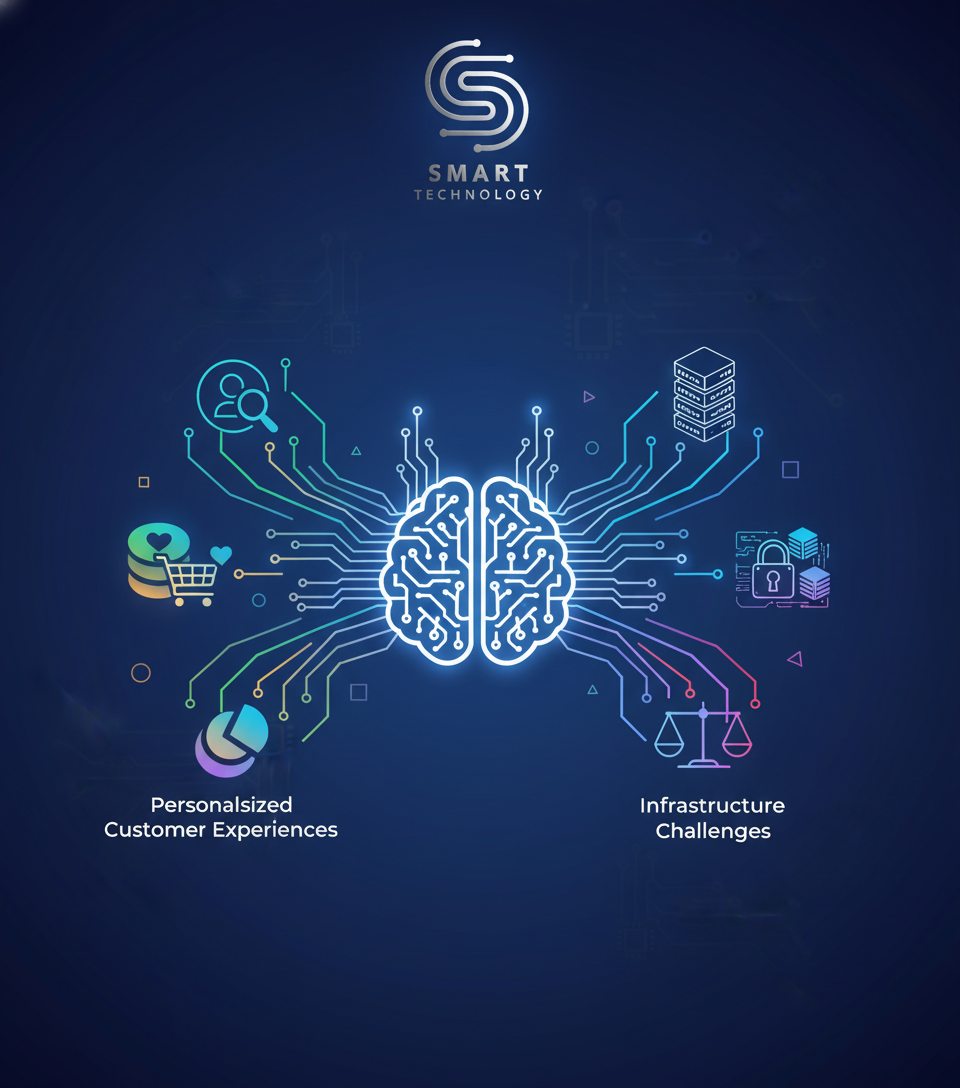
AI-Driven Business Transformation: Opportunities and Challenges for Business Owners
Artificial Intelligence (AI) is rapidly transforming industries, offering unprecedented opportunities for businesses to enhance customer experiences, optimize operations, and drive growth. However, this technological revolution also presents significant challenges that business owners must navigate.
Key Opportunities
- Personalized Customer Experiences: AI enables businesses to analyze vast amounts of customer data to deliver personalized recommendations, tailored content, and proactive support, increasing customer satisfaction and loyalty.
- Operational Efficiency: AI-powered automation streamlines processes, reduces manual tasks, and optimizes resource allocation, leading to significant cost savings and improved productivity.
- Data-Driven Decision Making: AI algorithms can analyze complex datasets to identify trends, patterns, and insights, empowering business owners to make informed decisions and develop effective strategies.
- Enhanced Products and Services: AI can be integrated into products and services to add new features, improve performance, and create innovative solutions that meet evolving customer needs.
Significant Challenges
- Infrastructure and Integration Costs: Implementing AI solutions often requires significant investments in infrastructure, software, and integration with existing systems.
- Data Privacy and Security Concerns: Handling sensitive customer data with AI raises critical concerns about privacy, security, and compliance with regulations like GDPR.
- Skills Gap and Talent Acquisition: Finding and retaining skilled AI professionals can be challenging, as the demand for AI talent far exceeds the supply.
- Ethical Considerations: Businesses must address ethical concerns related to AI bias, fairness, and transparency to ensure responsible and trustworthy AI implementations.
Navigating the AI Landscape
To successfully navigate the AI landscape, business owners should:
- Develop a clear AI strategy: Define specific business goals and identify AI applications that can deliver tangible value.
- Invest in data infrastructure: Ensure access to high-quality, relevant data and implement robust data governance practices.
- Build an AI-ready team: Invest in training and development programs to upskill employees and attract top AI talent.
- Prioritize ethical considerations: Establish ethical guidelines and implement safeguards to ensure responsible AI development and deployment.
By embracing AI strategically and addressing its challenges proactively, business owners can unlock new opportunities for growth, innovation, and competitive advantage.